
Could one bad choice ruin your future in New York? Aggravated DWI penalties are serious. They can change your life forever.
In New York, Aggravated DWI is a big deal. It’s more than just a traffic ticket. The fines can be very high, sometimes thousands of dollars.
Those charged face big penalties. It’s not just about money. You might lose your license, have to take alcohol classes, and even get a criminal record. This can hurt your job and personal life.
Key Takeaways
- Aggravated DWI carries more severe penalties than standard DWI
- BAC levels above 0.18% trigger enhanced legal consequences
- Potential penalties include significant fines and license suspension
- Criminal record implications can affect future opportunities
- Legal representation is key in dealing with these charges
Understanding DWI and Aggravated DWI in New York
Learning about New York DWI laws is important. The state has strict rules for driving under the influence. Breaking these rules can lead to big legal problems.
Definition of DWI
In New York, a DWI charge happens when a driver’s BAC is 0.08% or higher. This is the main rule for driving while drunk.
Definition of Aggravated DWI
An Aggravated DWI is a more serious offense. It has stricter penalties. The main reasons include:
- BAC level of 0.18% or higher
- Having a child under 16 in the car
- Driving with a suspended or revoked license
- Causing a lot of damage or injury
Key Differences Between DWI and Aggravated DWI
The main difference is the BAC limit and extra factors. A DWI is serious, but an Aggravated DWI is even worse. It can lead to:
- Longer license suspensions
- More jail time
- Higher fines
- Tougher court programs
Knowing these differences is key for anyone facing driving charges in New York.
Legal Blood Alcohol Concentration (BAC) Limits
Knowing about blood alcohol concentration (BAC) is key in New York’s drunk driving laws. The legal limits for drinking and driving can change criminal charges and penalties a lot.
New York has strict rules about drinking and driving. The NY High BAC DWI standards set clear limits. These limits decide how serious the legal trouble will be.
Standard BAC Limits
In New York, most drivers can’t have more than 0.08% BAC. If they do, they might face DWI charges. But, some drivers have different limits:
- Standard drivers: 0.08% BAC limit
- Commercial drivers: 0.04% BAC limit
- Drivers under 21: Zero tolerance (0.02% BAC)
Aggravated DWI BAC Threshold
The Aggravated DWI BAC Limit is more serious. If a driver’s BAC is 0.18% or higher, they get harsher penalties in New York.
Implications of Exceeding BAC Limits
Going over legal BAC limits can lead to big legal problems. Drivers with a BAC above the limit might face:
- License suspension
- Big fines
- Possible jail time
- Must take alcohol education classes
Legal experts say knowing these limits can help avoid serious trouble.
Consequences of Aggravated DWI Offenses
Understanding Aggravated DWI in New York is hard. The penalties are harsh and can change your life. Knowing the legal details is key for those facing Felony DWI NY charges.
Criminal Charges Overview
Aggravated DWI charges are serious. The jail time depends on BAC and past crimes.
- First-time offenders with BAC over 0.18% face misdemeanor charges
- Repeat offenses can escalate to felony classifications
- Potential penalties include substantial fines and extended jail time
Misdemeanor vs. Felony Accusations
The difference between misdemeanor and felony DWI matters. Misdemeanor charges are for first-time offenders with less severe cases. Felony charges have harsher penalties.
Jail Time and Fines
The penalties for Aggravated DWI are tough:
- Misdemeanor charges: Up to 1 year in jail
- Fines ranging from $1,000 to $2,500
- Mandatory license revocation for at least one year
- Required ignition interlock device installation
The law takes Aggravated DWI very seriously. Harsher penalties aim to stop repeat offenses and keep everyone safe.
Enhancements to DWI Penalties
New York has tough rules for DWI penalties. They give harsh punishments to those who keep getting caught. The NY DWI Penalty Guide lists things that make drunk driving charges worse.

Driving drunk gets much worse when certain things happen. Knowing about these penalties helps protect you and keeps you safe.
Prior DWI Convictions
Getting caught for DWI more than once means bigger trouble in New York. The law gets tougher with each offense:
- First offense: It’s usually a misdemeanor.
- Second offense in 10 years: It’s a more serious misdemeanor.
- Third offense in 10 years: It could be a felony.
Child Endangerment Charges
Driving drunk with a kid in the car is very serious. Leandra’s Law makes the penalties strict:
| Offense | Potential Consequences |
|---|---|
| DWI with Child Under 15 | Class E Felony |
| Potential Penalties | Up to 4 years in jail, $5,000 fine |
| Additional Charges | Child endangerment, possible family court action |
Serious Injury or Death Involvement
Crashes that hurt people badly or kill them while driving drunk are the worst. These can turn a simple DWI into serious crimes. You could face a lot of time in prison.
The NY DWI Penalty Guide says each bad factor makes penalties worse. This shows how important it is to drive carefully.
Administrative Consequences of Aggravated DWI
An Aggravated DWI Conviction NY has big penalties. These go beyond just criminal charges. They can really hurt a driver’s rights and wallet.
Drivers with an Aggravated DWI in New York face a tough road. The NY DWI Penalty Guide explains many important penalties. These can change a driver’s future on the road.
License Suspension Periods
License revocation is a common penalty for Aggravated DWI. Here are some key details:
- Mandatory minimum license suspension of 1 year
- Potential extended suspension for repeat offenders
- Complete license revocation for serious violations
Points on Driving Record
New York has a strict point system for traffic violations. An Aggravated DWI Conviction NY usually means:
- Immediate addition of 8 points to driving record
- Potential driver responsibility assessment fees
- Risk of additional penalties for accumulated points
Impact on Insurance Rates
An Aggravated DWI also affects insurance. Drivers can expect:
- Significant premium increases
- Potential policy cancellation
- Difficulty obtaining future insurance coverage
Dealing with these penalties needs a good legal plan. It’s also important to know New York’s traffic laws well.
Legal Defenses Against Aggravated DWI
Facing Aggravated DWI charges in New York can feel scary. But knowing your legal options is key. New York’s Drunk Driving Laws offer many ways to defend yourself. This gives people charged a chance to protect their rights and lessen penalties.
Common Defense Strategies
Attorneys who focus on Aggravated DWI Defense NY can fight many parts of a drunk driving arrest:
- Challenging Traffic Stop Validity: Showing the stop was not legal
- Questioning Breathalyzer Test Accuracy
- Examining Field Sobriety Test Procedures
- Identifying Possible Police Mistakes
Importance of Professional Legal Representation
Having a good lawyer is very important when facing Aggravated DWI charges. A skilled attorney can:
- Look closely at all case evidence
- Find weak spots in the prosecution’s case
- Plan a strong defense strategy
- Try to get charges lowered
Potential Plea Bargain Negotiations
Plea bargains can be a smart choice instead of going to trial. Good lawyers might get charges reduced. This could lessen the long-term effects of an Aggravated DWI conviction.
Just because you’re charged doesn’t mean you’ll be found guilty. The right lawyer can really change how your case goes in New York’s complex legal system.
Process of a DWI Arrest
Understanding New York Drunk Driving Laws can be tough, even during an Aggravated DUI New York arrest. The arrest process has many important steps. These steps can greatly affect your legal outcome.
Police officers have certain rules when they think someone might be driving drunk. Knowing these steps can help you understand your rights and possible legal issues.
Initial Traffic Stop Procedures
Police start a traffic stop if they see signs of drunk driving. These signs include:
- Erratic lane changing
- Excessive speed variations
- Inappropriate braking
- Driving significantly below speed limits
Field Sobriety Test Evaluation
When they think someone might be driving drunk, officers do field sobriety tests. These tests check how well you can move and think. They usually include:
- Horizontal Gaze Nystagmus Test: Tracking eye movement
- Walk-and-Turn Test
- One-Leg Stand Test
Breathalyzer Testing Protocols
If the field sobriety tests show you might be drunk, police will ask for a breath test. New York Drunk Driving Laws say you must give a breath sample when asked. Not doing so can lead to your license being taken away.
Breathalyzer tests are done carefully. They use special steps to make sure the results are right.
Navigating the Court System
Facing an Aggravated DWI charge in New York is tough. The legal process is complex. Knowing the NY DWI Penalty Guide is key for those facing serious legal issues.
When charged with an Aggravated DWI, defendants face many important steps:
- Arraignment hearing
- Preliminary legal consultations
- Evidence gathering
- Potential plea negotiations
- Trial preparation
Critical Steps in Legal Defense
Good Aggravated DWI Defense NY needs careful planning. Experienced lawyers often:
- Challenge breathalyzer accuracy
- Look at traffic stop legality
- Check for procedural errors
- Analyze chemical test protocols
Trial vs. Plea Bargain Considerations
Defendants must think hard about their choices. Plea deals might lower penalties. But trials let you fight charges fully. The best choice depends on your case, evidence, and future risks.
Legal Representation Importance
Having a good lawyer can change your case. A skilled attorney knows the court system well. They protect your rights and create a defense plan just for you.
Sentencing Guidelines for Aggravated DWI
Understanding Aggravated DWI Penalties in New York is key. The first offense can change your life. It’s important to know the legal effects.
Courts look at many things when deciding on Aggravated DWI sentences. These factors affect how harsh the penalties are.
Factors Influencing Sentencing
Several important things affect Aggravated DWI sentences in New York:
- Blood Alcohol Concentration (BAC) level
- Prior criminal and driving records
- Presence of additional criminal circumstances
- Potential property damage or personal injury
Minimum and Maximum Sentences
Sentences for Aggravated DWI depend on the case details:
| Offense Level | Potential Sentence | Fine Range |
|---|---|---|
| Second Offense within 10 Years | Up to 4 years in prison | $1,000 – $5,000 |
| Third Offense within 10 Years | Up to 7 years in prison | $2,000 – $10,000 |
Impact of Additional Offenses
Repeat offenders face harsher penalties. More criminal charges can make penalties much worse. This can turn a misdemeanor into a felony.
Knowing these guidelines shows why driving safely is so important. If you face Aggravated DWI charges in New York, get a lawyer right away.
Long-Term Effects of Aggravated DWI Convictions
An Aggravated DWI Conviction NY can cause big problems. These problems last long after the legal trouble is over. The effects of DWI Penalties NY State can change a person’s life a lot.

People with an Aggravated DWI Conviction NY need to know the big changes it can bring. These changes can last for many years after the first problem.
Employment Challenges
A DWI Penalties NY State record can hurt job chances a lot. Many jobs check your background. If they find a DWI, you might not get the job.
- Potential job rejections in sensitive industries
- Professional license suspension or revocation
- Reduced career advancement opportunities
Travel Restrictions
An Aggravated DWI Conviction NY can make traveling hard. It can stop you from going abroad or moving around freely.
| Travel Impact | Potential Consequence |
|---|---|
| International Entry | Visa denials or entry restrictions |
| Work Travel | Limited professional mobility |
| Personal Travel | Complications with border crossings |
Expungement Possibilities
Clearing a DWI record is hard but possible. Legal ways exist to seal or expunge records. This depends on the situation and how long it’s been.
- Waiting periods vary by jurisdiction
- Requires clean record post-conviction
- Legal consultation recommended
Knowing these long-term effects shows why driving safely is so important. It also shows why getting legal help is key when facing DWI charges.
The Role of Ignition Interlock Devices
After an Aggravated DUI New York conviction, you must understand Ignition Interlock Devices (IIDs). These devices are key in the NY DWI Penalty Guide. They help stop drunk driving from happening again.
What is an Ignition Interlock Device?
An Ignition Interlock Device is like a breathalyzer in your car’s dashboard. Drivers must give a breath sample before starting the car. If alcohol is found, the car won’t start. This stops people from driving drunk.
Installation Requirements
- Mandatory for most Aggravated DWI convictions
- Professional installation at driver’s expense
- Regular calibration and maintenance required
- Certification from authorized service centers
Duration of Use After Conviction
The time you need to use an IID depends on your conviction:
- First-time Aggravated DWI: Minimum 6 months
- Repeat offenses: Up to 5 years
- Severe cases: Lifetime use possible
It’s very important to follow IID rules. Trying to get around or mess with the device can lead to more legal trouble. This makes things even harder in an Aggravated DUI New York case.
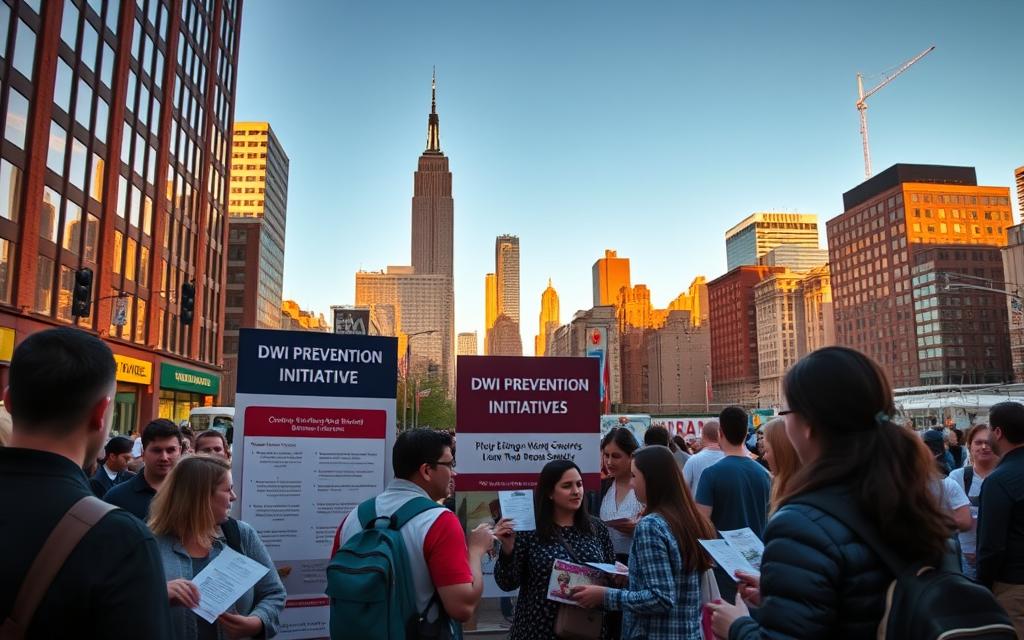
Prevention and Awareness Initiatives
Stopping drunk driving needs a big plan. New York Drunk Driving Laws focus on stopping it before it starts. They work with the community to make roads safer.
Community Programs and Resources
Local groups are key in fighting drunk driving. They offer many ways to help:
- Alcohol awareness workshops in schools and colleges
- Free substance abuse counseling services
- Community-based support groups for at-risk individuals
- Partnerships with local law enforcement for educational outreach
Role of Education in Prevention
The NY DWI Penalty Guide shows how important learning is. It teaches people about the dangers of driving drunk.
| Educational Program | Target Audience | Key Focus |
|---|---|---|
| High School Awareness Campaigns | Teenage Drivers | Risk Assessment and Safe Choices |
| College Alcohol Safety Seminars | Young Adults | Responsible Drinking Strategies |
| Workplace Training | Professional Adults | Recognizing Alcohol Impairment |
Encouraging Safe Driving Practices
There are simple ways to make driving safer:
- Promote designated driver programs
- Utilize ride-sharing services
- Host alcohol-free social events
- Implement workplace transportation support
Prevention is always better than facing legal consequences. By working together, communities can create safer roads for everyone.
Conclusion: Importance of Legal Knowledge
Knowing the laws about Aggravated DWI Penalties in New York is key. It helps protect your rights and future. A DWI conviction can hurt your job, relationships, and future chances.
Handling Aggravated DWI Defense in NY needs smart legal help. Good lawyers can lessen harm, find defense plans, and lower charges. DWI cases are complex and need expert advice.
Driving safely is the best way to avoid problems. Knowing the dangers of driving under the influence helps make better choices. If you’re charged with DWI, get help from skilled lawyers right away.
Every choice is important when dealing with DWI charges. Knowing your rights and making safe choices can lessen the harm of an Aggravated DWI conviction in New York.