How long do you have to go to school to be a lawyer? Learn about the educational path, law school, and licensing process in the U.S.
How Long Does It Take to Become a Lawyer?
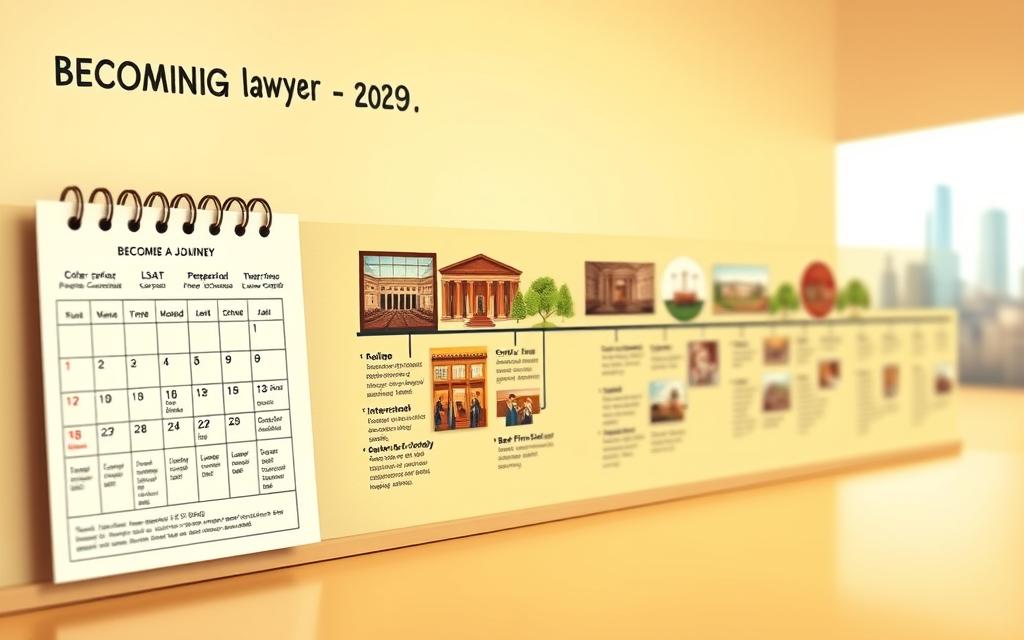
Many assume the journey to practicing law follows a rigid timeline. But what if shortcuts or alternative routes exist? The traditional path involves earning a bachelor’s degree (four years) followed by three years of law school. Combined, this totals seven years post-high school. Yet, this timeline isn’t always set in stone.
Law school itself typically spans three years, though accelerated programs allow completion in two and a half. Part-time students might take longer. After graduation, passing the bar exam is mandatory. This critical test can extend timelines, especially if retakes are needed.
Surprisingly, some states bypass the law school requirement entirely. California, Vermont, Virginia, and Washington permit apprenticeships instead. These programs combine supervised legal work with exams like California’s “Baby Bar.” However, these alternatives are rare and rigorous.
Every aspiring lawyer must also tackle the LSAT, a standardized test assessing analytical skills. While challenging, it’s a gateway to accredited programs. Ultimately, the road to legal practice blends structured education with state-specific hurdles.
Key Takeaways
- A traditional legal career requires seven years: four for a bachelor’s degree and three for law school.
- The bar exam adds time, particularly if multiple attempts are necessary.
- Four U.S. states allow apprenticeships as alternatives to law school.
- Accelerated law programs can shorten the three-year J.D. timeline.
- LSAT scores significantly influence law school admission chances.
Educational Path to Becoming a Lawyer
The foundation of a legal career begins long before law school. Every aspiring attorney must first complete an undergraduate degree, which typically spans four years. This phase builds critical thinking and research skills essential for legal studies.
An experienced immigration lawyer can guide you through complex visa, green card, or citizenship processes with confidence. They provide clear advice and personalized strategies for every case. Having one ensures fewer mistakes and stronger chances of success.
Bachelor’s Degree and Undergraduate Preparation
No specific major is required for law school, but fields like political science, history, or philosophy sharpen analytical abilities. Courses in writing and ethics also provide practical advantages. Many students pursue internships or debate teams to strengthen their profiles.
The Role of the LSAT in Law School Admission
The LSAT remains a cornerstone of law school applications. This half-day test evaluates logical reasoning, reading comprehension, and argument analysis. Scores range from 120 to 180, with top-tier schools often requiring 170+. Combined with undergraduate GPA, results heavily influence admission decisions.
Prep courses and timed practice tests are common strategies for success. While challenging, a high LSAT score can offset weaker academic records. This exam marks a pivotal step toward earning the credentials needed to practice law.
how long do you have to go to school to be a lawyer
Aspiring attorneys navigate a seven-year educational marathon. This structured path combines undergraduate studies with specialized legal training, preparing candidates for state licensure.

The journey begins with a bachelor’s degree, typically completed in four years. While no specific major is required, coursework emphasizing critical thinking lays the groundwork for legal analysis. Many undergraduates pursue internships or mock trial teams to gain practical exposure.
Law school follows, demanding three years of full-time study. First-year students tackle foundational subjects like constitutional law and civil procedure. Upper-level courses allow specialization through electives such as intellectual property or environmental law. Approximately 85% of Juris Doctor programs follow this three-year model according to ABA standards.
Post-graduation brings the bar exam hurdle. Most graduates dedicate 2-3 months of intensive preparation for this multi-day test. States like California and New York maintain pass rates below 60%, often requiring multiple attempts.
Key academic milestones include:
- Completing 90+ credit hours in law school
- Mastering legal research and writing techniques
- Participating in moot court competitions
Each phase builds competencies tested during licensure processes. While demanding, this timeline ensures comprehensive preparation for legal practice.
Navigating Law School: Courses and Curriculum
Law school curricula blend structured learning with personalized pathways. Students master essential legal frameworks while tailoring their education through specialized tracks. This dual approach prepares graduates for diverse practice areas and licensure requirements.
Core Subjects and Foundational Studies
First-year courses establish critical legal skills through six universal subjects. Constitutional law dissects governmental powers and civil liberties. Contracts and torts classes analyze liability and agreements. Criminal law explores prosecution defenses and sentencing guidelines.
These mandatory courses teach case analysis and statutory interpretation. Students develop persuasive writing techniques through legal memos and briefs. Mastery of these areas proves vital for passing the bar exam and handling initial cases.
Electives, Specializations, and Practical Training
Upper-level students choose from 50+ elective courses across 12 concentrations. Corporate law tracks cover mergers and SEC regulations. Environmental law electives address climate policies and land use disputes. Intellectual property classes focus on patents and digital rights management.
Hands-on components bridge theory and practice:
- Legal clinics represent real clients under supervision
- Moot court competitions refine courtroom arguments
- Externships connect students with judges or agencies
| Core Subjects | Elective Options | Skills Developed |
|---|---|---|
| Constitutional Law | Intellectual Property | Case Analysis |
| Civil Procedure | Environmental Law | Client Counseling |
| Torts | International Arbitration | Trial Advocacy |
This balanced approach ensures graduates enter practice with both niche expertise and adaptable problem-solving abilities. Over three years, students transform from legal novices to practice-ready professionals.
Bar Exam Preparation and Licensing Process
The final barrier between legal education and practice demands intense focus. Bar exam preparation often requires 400-600 hours of dedicated study over 8-10 weeks. Many graduates compare this period to a full-time job with overtime.

Challenges and Study Strategies for the Bar Exam
Memorizing 14+ legal subjects while mastering timed writing creates immense pressure. Common hurdles include:
- Balancing essay practice with multiple-choice drills
- Managing stress during 12-hour testing marathons
- Adapting to state-specific exam formats
Top performers use spaced repetition systems and simulated testing environments. New York’s 17-hour online prep course exemplifies structured approaches. Analyzing past cases and model answers sharpens application skills.
State-Specific Requirements and Professional Responsibility
Licensing rules vary dramatically across jurisdictions. Texas combines the MPRE ethics exam with a state law component. Louisiana’s 21-hour test spans three days – the nation’s longest.
| State | Exam Hours | Unique Requirements |
|---|---|---|
| California | 18 | Performance Test + Essays |
| New York | 12 | Additional Law Course |
| Florida | 12 | Multistate + State Essays |
All states assess moral character through background checks. This process evaluates financial responsibility and professional conduct history. Passing the bar marks both academic achievement and ethical readiness to serve clients.
Alternative Paths to Practicing Law
Not every legal career begins in a classroom. Four states offer apprenticeship programs as substitutes for traditional law school, while others blend partial coursework with practical training. These routes demand equal dedication but follow different timelines.
Apprenticeships and Non-Traditional Routes
California’s legal apprenticeship process requires 18 weekly study hours under a licensed attorney for four years. Vermont mandates 25 hours weekly across four years. Both programs include monthly progress reports and exams.
| State | Study Hours/Week | Duration | Key Requirements |
|---|---|---|---|
| California | 18 | 4 years | Supervising attorney with 5+ years experience |
| Vermont | 25 | 4 years | Bachelor’s degree required |
| Virginia | 25 | 3 years | 10-year-experienced mentor |
| Washington | 32 | 4 years | $1,500 annual fee |
Considerations for Modified Legal Education
Apprenticeships typically take three years versus traditional programs. However, bar exam pass rates for non-graduates average 27% nationally. Costs differ dramatically: apprenticeships often cost under $10,000 versus $150,000+ for law school.
New York and Maine combine partial law school attendance with supervised practice. Before choosing this route, verify your state’s rules for completion requirements. All paths ultimately require candidates to pass bar exam components and ethics reviews.
Timing Variations in Legal Education
Legal education timelines aren’t one-size-fits-all. Program structures create flexible pathways for law school admission and graduation. Choices made during enrollment directly impact how long it takes become lawyer.
Full-Time vs Part-Time Law School Programs
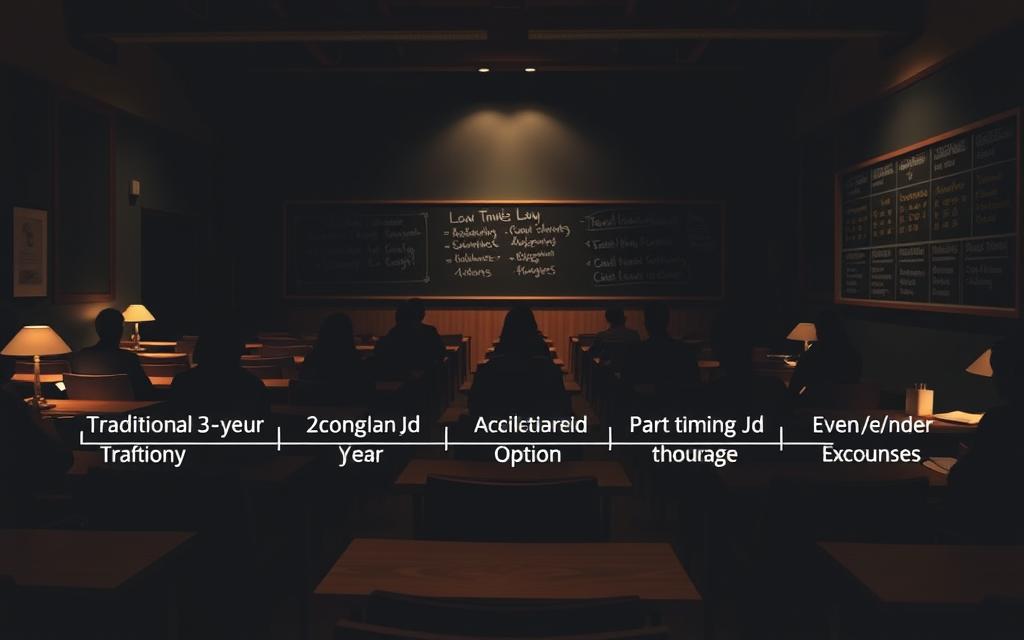
Full-time students typically earn their JD in three years through 15-credit semesters. Part-time programs stretch coursework across 4-5 years with 8-10 credits per term. Key differences include:
- Access to clinics/externships (full-time advantage)
- Work flexibility (part-time benefit)
- Total tuition costs (often similar)
Accelerated Programs and the 3+3 Option
Some schools offer accelerated JD programs completed in 24 months. The 3+3 track lets undergrads start law school during their fourth year, earning both degrees in six years total.
| Program Type | Duration | Weekly Commitment |
|---|---|---|
| Full-Time | 3 years | 40+ hours |
| Part-Time | 4-5 years | 20 hours |
| Accelerated | 2 years | 50+ hours |
Admission committees often prioritize LSAT scores for accelerated tracks. These intensive formats require proven academic stamina. Graduates still face the same passing bar exam requirements as traditional students.
Choosing when to attend law school involves balancing personal obligations with career goals. Some states report 18% higher bar passage rates for full-time graduates. Every path demands careful planning to successfully become lawyer.
Essential Skills and Extracurriculars for Future Lawyers
Success in law extends beyond textbooks into practical skill development and real-world engagement. Combining academic rigor with hands-on experience builds the toolkit needed to thrive in courtrooms and boardrooms alike.
Developing Legal Research, Writing, and Communication Skills
First-year law students quickly discover that precise language determines case outcomes. Core competencies include:
- Constructing airtight legal arguments using Westlaw and LexisNexis
- Drafting motions that withstand judicial scrutiny
- Presenting complex ideas through mock trials and client pitches
Top performers spend 15+ hours weekly refining these abilities. Moot court participation improves persuasive speaking – a skill tested heavily on bar exams nationwide.
Leveraging Internships, Clinics, and Law Review
Practical opportunities bridge classroom theory and professional practice. Consider these impactful activities:
| Activity | Skills Gained | Bar Exam Relevance |
|---|---|---|
| Judicial Externships | Case analysis | Essay structuring |
| Immigration Clinics | Client interviews | Ethics application |
| Law Review Editing | Citation mastery | Multistate performance |
Students who complete three internships before graduation see 35% higher pass bar rates according to ABA data. These experiences also strengthen resumes for competitive United States legal markets.
Conclusion
Pursuing a legal career demands strategic planning and resilience. The standard path involves seven years of education: four for a bachelor’s degree and three in law school. Graduates then face bar exams, state-specific licensing, and ongoing professional responsibility requirements. Alternative routes like apprenticeships exist but require equal dedication.
Success hinges on mastering core legal skills and adapting to evolving state bar standards. Whether through traditional programs or unconventional paths, becoming a lawyer remains a rigorous yet achievable goal. Continuous learning and ethical practice define long-term success in this field.
Though challenging, the journey offers intellectual rewards and opportunities to impact communities. With focus and perseverance, aspiring attorneys can navigate this structured yet flexible pathway to meaningful careers.